
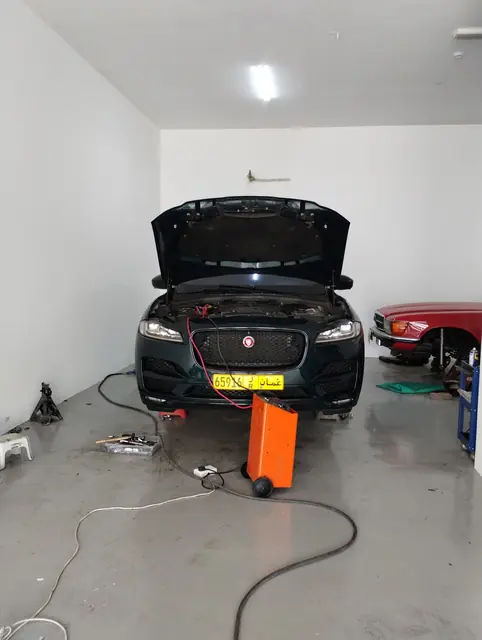
Cars sold in the Gulf are built for heat, but a Muscat summer still tests every part of them. Months of high temperatures, humidity on the coast, dust and stop-start traffic wear components faster than the manufacturer’s European test schedules assume. Here is what suffers most, and what to check before the hottest months.
Battery
Heat, not cold, is what shortens battery life. High temperatures speed up the chemical wear inside the battery, and a battery that seemed fine in winter can fail without warning in July, usually in a car park at midday. In the Gulf, a battery lasting two to three years is common, so if yours is older, have it tested before summer. A proper test checks its health under load, not just the voltage.
Modern cars with start-stop systems use special batteries (AGM or EFB) and often need the new battery registered to the car’s control unit after fitting. Fitting the wrong type, or skipping the registration, shortens its life.
Cooling system
The engine’s cooling system works hardest in summer traffic. Check for:
- Coolant at the right level and the right type for your car, at the correct concentration. Old coolant loses its protection against corrosion.
- Hoses that are cracked, swollen or soft.
- The radiator and condenser at the front of the car, which collect dust, sand and insects and lose efficiency.
- Cooling fans that switch on when they should.
If the temperature gauge climbs above normal, or a coolant warning appears, stop as soon as it is safe and switch off. Driving on with an overheating engine can cause damage that costs far more than the repair would have.
Air conditioning
In Muscat, air conditioning is not a comfort extra; it is essential. Signs of trouble include air that is not as cold as it was, cold air that comes and goes, unusual noises when the AC is on, or a musty smell. A service checks the refrigerant charge, looks for leaks, cleans or replaces the cabin filter and checks the compressor and fans. Fixing a small leak early is much cheaper than replacing a compressor that has run low on refrigerant and oil.
Tyres
Heat increases tyre pressure and road surface temperatures soften the rubber. Under-inflated tyres run hotter still, which is when blow-outs happen. Check pressures when the tyres are cold, in the morning, against the figures on the door pillar or in the handbook, not the maximum printed on the tyre. Look for cracking in the sidewalls, and check the date code: rubber ages faster in heat, so even tyres with plenty of tread can be too old to be safe.
Engine oil and fluids
Oil works harder at high temperatures. Use the grade and specification your manufacturer requires, and follow the “severe conditions” service interval where the handbook gives one, because Gulf driving usually qualifies. Brake fluid absorbs moisture over time and should be changed at the specified interval.
Paint, rubber and interior
Sun and heat fade paint, dry out rubber seals and wiper blades, and crack dashboards. Shade, a windscreen screen and regular washing to remove dust help. Wiper blades often need replacing every year.
A pre-summer check
The simplest approach is a pre-summer inspection in spring: battery test, cooling system, air conditioning, tyres, fluids and belts. It takes little time and catches most of the problems that would otherwise leave you stranded in the heat.
Book a summer check
Message Garage Lutis on WhatsApp with your car’s make, model and year, and we’ll arrange a time.